Buying guide / field decision
How to Choose the Right Lawn Aerator for Your Lawn
Pick the machine by the job it can actually do in your soil, on your property, with the equipment and labor you really have. The cheapest aerator is expensive if it cannot pull cores, fit through the gate, or survive the way you need to use it.
Our editorial recommendation is to start with a core or plug aerator if the problem is soil compaction. Then choose manual, powered walk-behind or tow-behind based on the lawn, soil, terrain, access, available equipment and tolerance for physical work.
Choose in this order
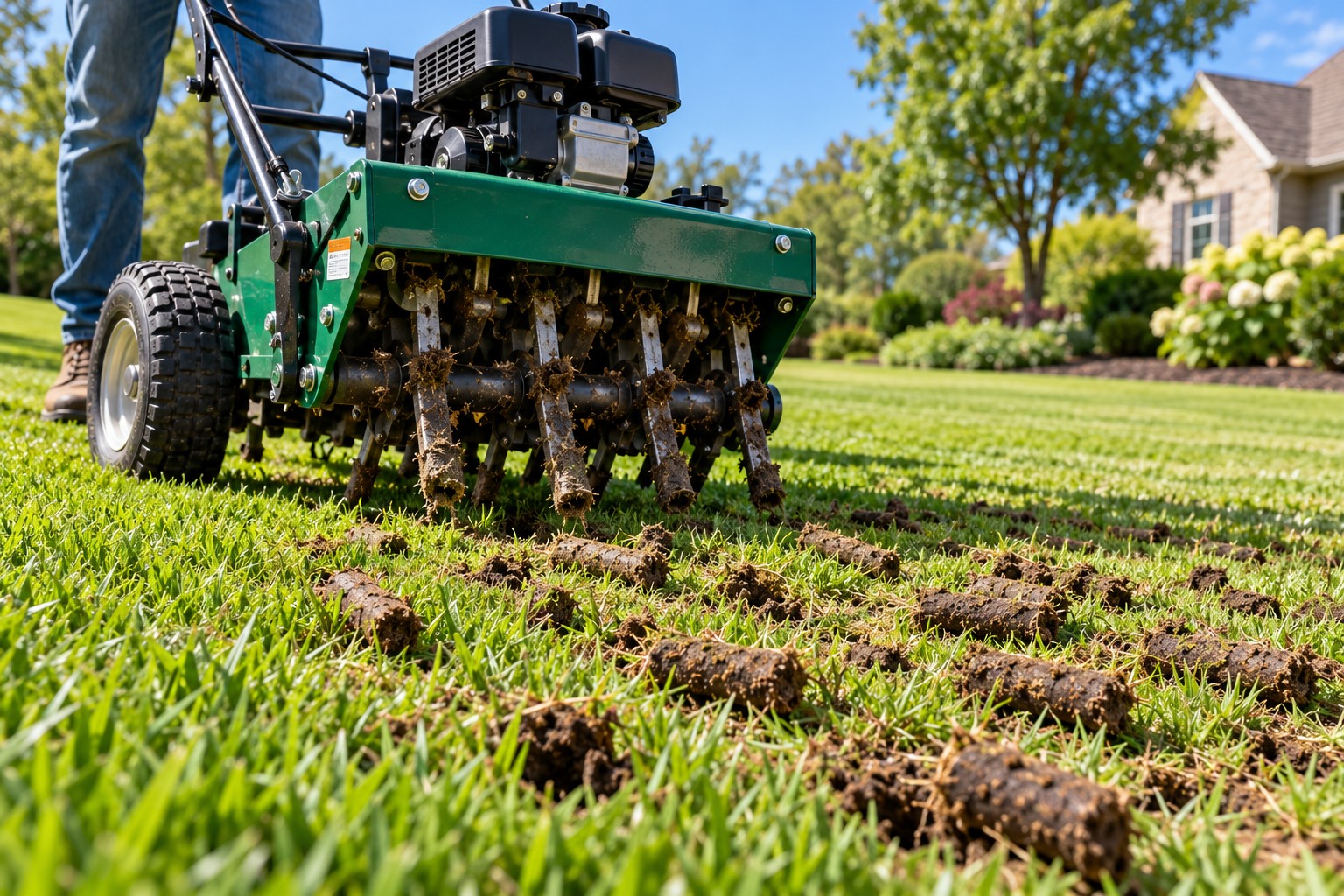
The guide starts with need, not equipment.
First decide whether aeration is the job
Aeration is relevant when the lawn has a compaction problem or a use pattern that creates one. The buying mistake is to treat an aerator as a universal lawn-health machine. If the real problem is severe thatch, poor grading, chronic standing water, nutrient imbalance or damaged turf, buying an aerator may simply give you a more complicated version of the wrong answer.
The useful question is physical: does the root zone behave like compacted soil, and would creating open channels or removing cores address that constraint? This page does not try to become a complete lawn-diagnosis manual. It gives just enough context to keep you from choosing an aerator before deciding that aeration is actually relevant.
Choose the mechanism before the machine.
Core vs spike: choose the mechanism before the machine
This is the first hard filter.
A core or plug aerator uses hollow tines to remove small cylinders of soil. A spike aerator uses solid points that enter the soil without removing a core. Nebraska Extension's aerification guidance distinguishes hollow and solid tine approaches and treats tine size, spacing and resulting hole pattern as meaningful parts of the process.
For a homeowner trying to relieve compaction, our editorial preference is core aeration because the mechanism directly removes material from the compacted root zone.
A spike roller may have specialized or lighter-duty uses, but we would not treat "it made holes" as equivalent evidence that compaction was relieved.
What to look for in a core tool
The meaningful test is not the brochure's nominal tine depth. Ask whether the hollow tine can penetrate your soil and eject the plug repeatedly. Community discussions about manual aerators repeatedly describe clay packing into the tube until the tool stops functioning like a corer. If you expect heavy soil, tine shape, opening size, finish and easy clearing deserve more attention than decorative specifications.
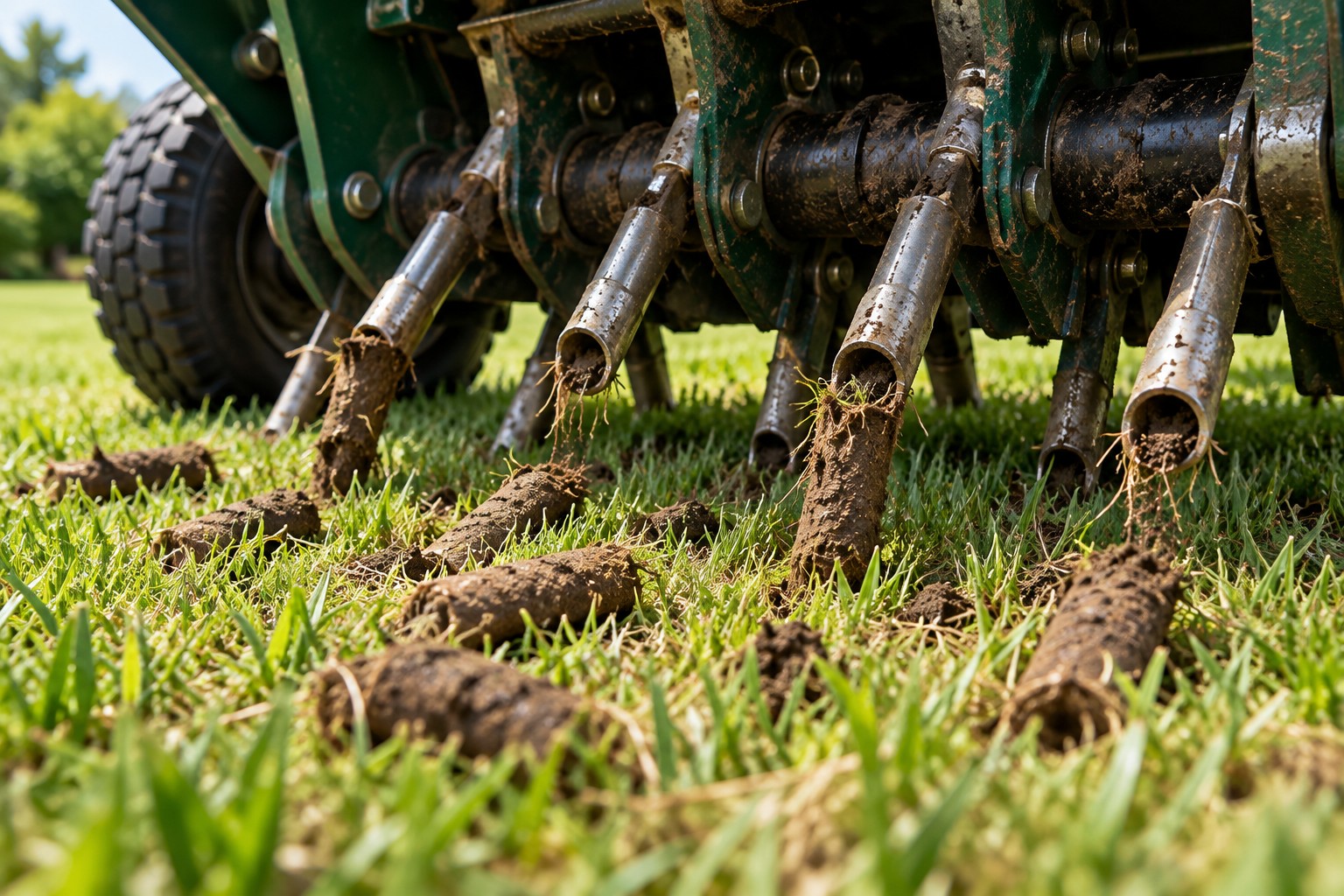
Choose the work system, not the cheapest object.
Manual, powered or tow-behind
Manual core aerator
Best fitGenuinely small areas, isolated trouble spots, narrow access.
Main catchRepetitive force, clog clearing and time can turn a low purchase price into a miserable job.
Powered walk-behind core aerator
Best fitLawns large enough to make manual work irrational when you do not already own a tow machine.
Main catchWeight helps penetration but complicates transport, loading, slopes and tight turns.
Tow-behind core aerator
Best fitLarger, open lawns when a suitable lawn tractor or riding mower is already part of the property.
Main catchPenetration often depends on weight, and that weight must be compatible with both the aerator and tow machine.
Spike roller or spike tool
Best fitNarrower surface-perforation jobs where core removal is not the objective.
Main catchDo not mistake visible punctures for the same process as extracting soil cores.
There is no defensible universal rule such as "manual below X square feet". Soil hardness, physical condition, obstacle density and tine clogging change the workload too much. In the community research behind this guide, one person described about 800 square feet of manual aeration as a roughly 12-hour project spread over a week, while separate discussions around 2,000 square feet strongly warned about the effort. Those are anecdotes, not thresholds. Their value is in showing why square footage alone is a bad selector.
Size, soil and terrain interact.
Match the aerator to soil, size and terrain together
Lawn size changes the labor equation
A larger lawn increases the number of penetrations, passes and turns. That pushes the decision toward powered equipment, renting, tow-behind systems or professional service. But it still does not create a magic acreage cutoff. A small lawn with dense clay and awkward access can be harder to aerate than a much larger open lawn with workable soil and suitable equipment.
Clay changes penetration and plug ejection
Hard, dry clay can resist tine entry. Very wet clay can stick inside hollow tines. Users often describe a narrow workable window: moist enough for penetration, not so saturated that the tool simply fills with sticky soil. Treat operating conditions as part of the diagnosis before condemning or buying a different aerator.
Slopes change the acceptable machine
Heavy walk-behind equipment can be unpleasant to control on slopes. Tow-behind equipment adds traction and braking questions for the mower or tractor. A machine that is ideal for a flat acre may be a poor choice for a much smaller hillside. Weight is not automatically good; it is useful only when you can control it.
Access can beat productivity
Working width looks like pure productivity until gates, sheds, trees, garden beds and tight turns enter the picture. Measure the narrowest access point and think about turning space. A slightly narrower machine that reaches the whole lawn can be faster than a wide machine that requires awkward repositioning or cannot reach part of the property at all.
The attachment is only one component.
Tow-behind only makes sense if the towing system makes sense
The aerator is not the whole machine.
A tow-behind plug aerator can be a rational ownership choice when you already own a suitable mower or tractor and have a large, reasonably open lawn. Without that power unit, a cheap tow-behind attachment is not a cheap solution at all.
Ballast is a performance requirement with consequences
Owners frequently add weight to help tow-behind tines penetrate. The problem is that the weight has to go somewhere: through the tray, frame, wheels, hitch, turf and tow machine. Maximum tray capacity, frame strength, mower towing guidance and traction therefore matter more than folklore about the number of blocks people happen to use.
Do not reduce compatibility to one horsepower number. The useful questions are whether the machine is approved for the load, whether it can maintain traction, whether the transmission and hitch are appropriate, and whether the property adds slopes or repeated turning that increase stress.
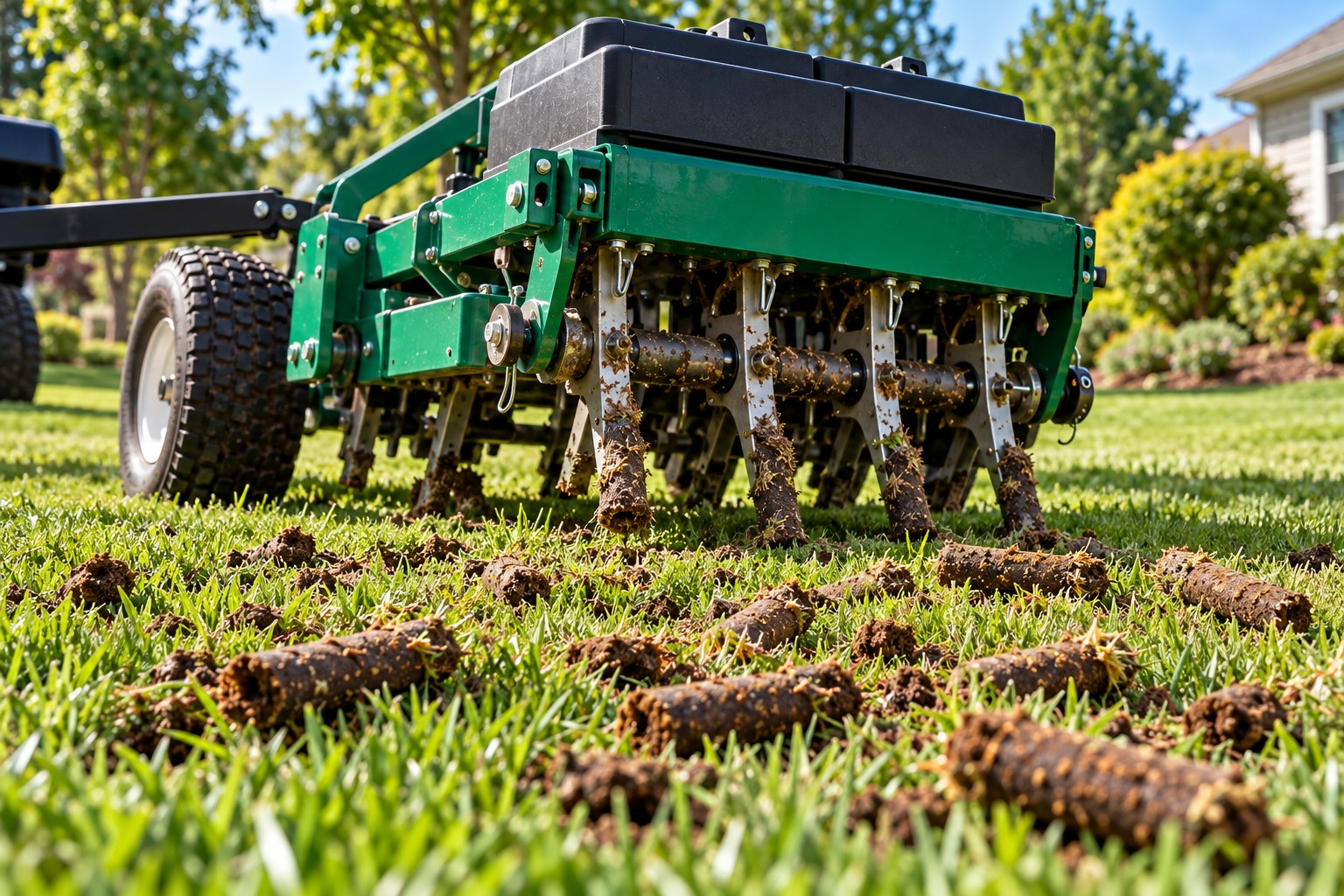
Ownership economics are mostly logistics.
Buy, rent or hire: calculate friction, not just price
Rental looks cheap when the calculation stops at the daily rate. Real rental cost also includes availability, vehicle requirements, ramps, pickup time, loading, unloading, return deadlines and the condition of the machine you receive. A heavy powered aerator that requires a trailer or difficult loading can make a professional service quote more rational than it first appears.
Buying makes more sense when the machine suits the property, storage is easy, use will repeat, and ownership removes meaningful recurring friction. Buying makes less sense when the tool will sit outside, corrode, consume scarce storage or require maintenance for a once-a-year job. Community discussions consistently frame this as a hassle calculation rather than a simple rent-versus-purchase spreadsheet.
Buy
Favor it whenThe class is known to fit, storage exists and use will repeat.
Reject it whenOwnership creates a storage or maintenance problem larger than the rental problem.
Rent
Favor it whenYou need serious powered equipment infrequently and can transport it safely.
Reject it whenPickup, loading, vehicle requirements and machine condition make the day a logistics project.
Hire
Favor it whenThe lawn is large, difficult, sloped or the transport/labor burden is the main obstacle.
Reject it whenYou already own a suitable system and can do the work efficiently without creating another problem.
Specs are second-stage filters.
Specifications that matter after you choose the class
Once the class is right, compare the machine within that class. This is where specifications become useful instead of distracting.
Our recommendations by situation
Fast ways to eliminate the wrong equipment.
What we would reject before comparing prices
- A spike device sold as a substitute for core removalIf relieving compaction is the job, the mechanism matters.
- A manual tool for a job you are already dreading physicallyCheap equipment is not cheap if you abandon it halfway through the lawn.
- A tow-behind aerator without a suitable tow machineThe attachment is only one component of the system.
- A ballast plan that exceeds the aerator or mower's permitted loadImprovised weight is not a substitute for compatibility.
- A machine too wide for the narrowest gate or too awkward for the turn patternProductivity begins with access.
- A heavy walk-behind machine for a slope you cannot control confidentlyPenetration is useless if handling becomes the dominant risk.
- A purchase justified only by the sticker priceTransport, storage, maintenance and labor are part of the cost.
Visible output matters.
How to tell whether the aerator is actually doing the job
For a core aerator, the obvious field check is whether you are seeing actual soil plugs on the surface. If the machine is making only shallow punctures, scratches or slashes, first check operating conditions and setup before assuming that another pass will fix it.
Dry ground can prevent penetration. Saturated sticky clay can clog hollow tines. Too little effective machine weight can leave a tow-behind unit skating over the surface. A clogged manual tool can become a hole punch. The lesson is simple: verify the output, not the motion of the machine.
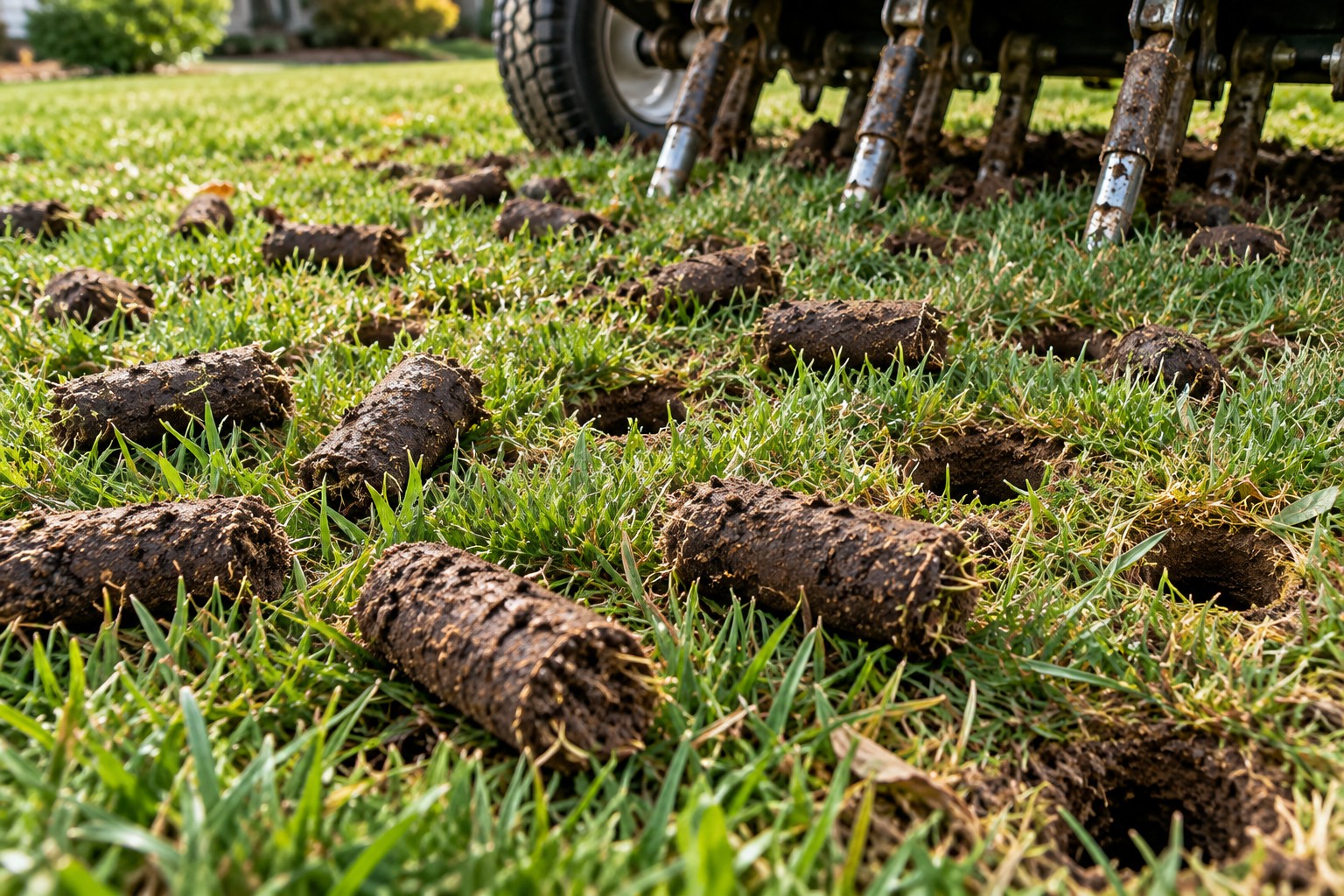
Frequently asked questions
What type of lawn aerator is best for compacted soil?
Our editorial preference is a core or plug aerator that removes soil cores. The next decision is whether manual, powered walk-behind or tow-behind operation fits the property and equipment you already have.
Is a spike aerator better than nothing?
A spike tool may have limited uses, but we would not treat it as equivalent to core removal for a compaction problem. It punches the soil rather than removing a plug.
How small does a lawn need to be for a manual aerator?
There is no honest universal square-foot cutoff. Soil hardness, clay clogging, physical condition, obstacles and how much repetitive work you tolerate can move the practical boundary dramatically.
Are manual core aerators worth it?
They can be sensible for small areas and spot treatment when the soil ejects cleanly from the tines. They become a poor bargain when the area is large, the soil is hard or every few penetrations require clearing clogged tubes.
When does a tow-behind aerator make sense?
It makes the most sense on larger, open lawns when you already own a suitable lawn tractor or riding mower and can verify hitch, load, traction and storage compatibility.
How much weight should I put on a tow-behind aerator?
Use the aerator manufacturer's designed ballast capacity and the tow machine's permitted load as the boundaries. Do not copy an arbitrary number of blocks from somebody else's setup.
Why is my core aerator not pulling plugs?
Common causes discussed by users include soil that is too dry to penetrate, clay that is wet enough to clog, insufficient effective weight and hollow tines that are already packed with soil.
Is wider always better?
No. Wider equipment reduces passes on open ground but can create access and turning problems. Measure gates and think about obstacles before treating width as a pure productivity gain.
Should I buy or rent a powered aerator?
Compare the full friction. Rental may be rational for occasional use, but transport, loading, pickup time and machine availability count. Buying only wins when the machine fits, storage is easy and repeated use justifies ownership.
Should I hire a lawn service instead?
Hiring becomes more rational when the property is large, steep or difficult, when powered rental transport is the main obstacle, or when you do not want to own equipment used infrequently.
How important is soil moisture when choosing an aerator?
Very. Moisture changes penetration and clogging, so it affects whether a specific machine appears to work. The practical target is workable soil rather than hard dry ground or saturated mud.
What specification should I compare first?
After choosing the correct class, compare working width against access, then tine design, machine weight or ballast system, maneuverability, durability and serviceability. Price comes after suitability.
How this guide was built
This guide combines technical aerification guidance with discovery research from Reddit and specialist lawn and equipment forums. The community material is used for recurring problems, buying language and failure modes - not as proof that every technical statement in a comment is correct.
The strongest recurring decision factors were soil behavior, visible core extraction, lawn size, physical effort, transport, terrain, access, towing and ballast compatibility, storage and the real friction of buying versus renting. We intentionally avoid inventing universal square-foot or horsepower thresholds because the source discussions show those cutoffs changing with soil, layout and equipment.
Sources
- Nebraska Extension - Updated Information on Lawn Aerification
- Lowe's - Lawn Aerator Buying Guide
- Reddit r/lawncare - manual core aerator clogging discussion
- Reddit r/lawncare - manual aeration effort discussion
- Reddit r/lawncare - tow-behind plug aerator, weight and penetration discussion
- Reddit r/lawncare - slope and heavy-machine handling discussion
- Reddit r/lawncare - tow-behind ownership and lawn-size discussion
- Lawn Mower Forum - plug aerator width, access and durability discussion
- TractorByNet - tow-behind aerator durability and maneuverability discussion
- TractorByNet - lift and tow-behind handling discussion